


Benefits of Solid Wood Pool Tables: What to Know
Table of Contents
- What Solid Wood Actually Means on a Pool Table
- Solid Wood vs Engineered Wood Pool Tables: An Honest Comparison
- Pool Table Maintenance Tips for Wood Components and Slate
- Frequently Asked Questions
Last Updated: October 13, 2026
What Solid Wood Actually Means on a Pool Table
The benefits of solid wood pool tables begin with understanding where solid wood is used in the construction. Depending on the design, solid wood may be used for the legs, rails, cabinet, or portions of the supporting frame. Other components may incorporate engineered wood, veneers, or additional materials.
The playing surface is a separate consideration. Many quality pool tables use slate for consistent play, regardless of whether their exterior components are solid wood or a combination of materials. A table described as having solid wood construction does not necessarily mean every component is made from solid timber.
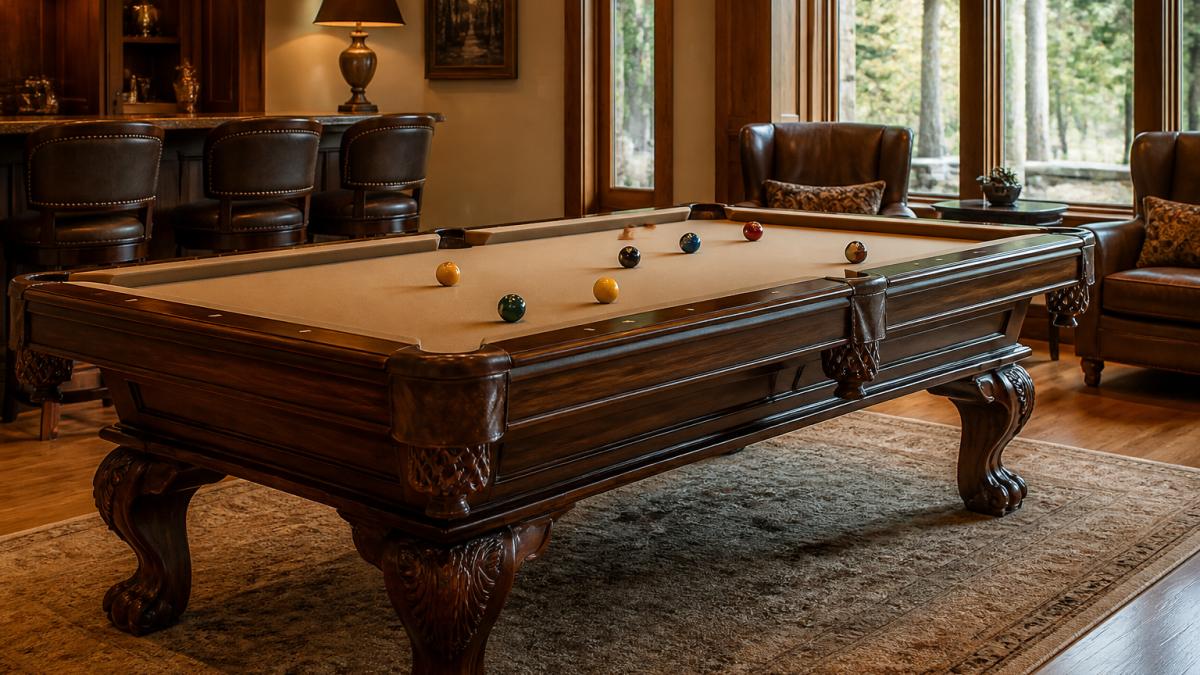
Marketing language blurs this: a "wood pool table" may mean a veneered cabinet over particle board, and "solid wood rails" may mean only the rails. Reading the specification line by line is the only reliable way to know what is actually solid.
Solid Wood vs Engineered Wood Pool Tables: An Honest Comparison
Neither solid wood nor engineered wood is automatically the better choice. Solid wood offers natural grain patterns, distinctive character, and potential refinishing options. Engineered wood products vary in construction and may offer dimensional stability in certain applications. Wood veneers can provide the appearance of natural wood over a different core material. The right choice depends on construction quality, finish, room conditions, and personal preferences.
Factor |
Solid Wood |
Engineered Wood / Veneer |
|---|---|---|
Appearance |
Natural grain, unique character |
Consistent, uniform surface |
Refinishing |
Often possible, depends on finish and component |
Limited; veneer can be sanded through |
Humidity response |
Can expand or contract with changes in humidity |
Varies by core material, construction, and finish |
Construction quality matters more than the label: a well-built engineered table with sound joinery and a stable frame can outperform a poorly built solid wood table. Kiln-dried lumber, tight joinery, a properly supported slate bed, and smart material placement all affect how a table holds up.
For buyers who want verified details, the American Wood Council guidance on wood movement explains how humidity affects solid timber over time. Homeowners in dry or humid climates should weigh that behavior carefully before choosing.
Pool Table Maintenance Tips for Wood Components and Slate
Routine care keeps both wood and slate in good condition. Wipe wood surfaces with a soft, dry cloth, avoid excessive moisture, control room humidity where possible, and have the slate leveled and cloth inspected periodically by a qualified technician.
Refinishing depends on the component and the original finish. A solid wood leg or rail may accept light sanding and a new finish; a veneered panel may not. Always check the manufacturer's recommendations first.
When comparing pool tables, review the specifications for the frame, rails, cabinet, and playing surface separately. The Canton 8-Foot Slate Pool Table is one example shoppers can explore at Lounge Apex. Check the current product listing for its construction materials, slate specifications, and available delivery services rather than assuming those features are standard across all pool tables.
Frequently Asked Questions
Are solid wood pool tables more durable than engineered wood?
Not automatically. Durability depends on joinery, frame construction, finish quality, and how the table is used and kept. A well-built engineered wood table with sound joinery can hold up well, while a poorly assembled solid wood table may not. Look at how the frame is put together and how the components are specified rather than assuming the solid wood label guarantees a longer life.
Is slate always used in solid wood pool tables?
Slate is common on quality tables, including many with solid wood frames, cabinets, and rails. The wood exterior and the playing surface are separate considerations: a table can have a solid wood frame and still use a slate bed. Some tables use other playing surfaces, so check the individual product specifications rather than assuming. For example, shoppers can review the specifications of the Canton 8-Foot Slate Pool Table to see how its playing surface and other construction materials are described.
How does humidity affect solid wood pool table components?
Wood moves as humidity changes, which can affect solid wood legs, rails, and cabinets over time. Stable indoor conditions help limit swelling and shrinking. Keep the table away from direct heat, drafts, and damp basements where possible, and check the manufacturer's guidance for the specific table. Maintaining consistent indoor conditions can help protect wood components and support the overall condition of the table.
Choosing a pool table starts with understanding how its materials contribute to appearance, construction, and long-term care. Solid wood can bring natural character and refinishing possibilities, while the quality of the frame, rails, and playing surface remains equally important.
Explore Lounge Apex's curated selection of pool tables to compare designs, materials, and features suited to your game room.


