


Best Materials for Durable Game Room Furniture
Table of Contents
- Solid Wood vs Engineered Wood Furniture: What Actually Matters
- Choosing Home Theater Seating Materials for Long-Term Comfort
- Game Room Furniture Construction Quality: Joinery, Hardware, and Finish
- Frequently Asked Questions
Last Updated: October 1, 2026
Solid Wood vs Engineered Wood Furniture: What Actually Matters
Solid wood, plywood, MDF, veneers, and other engineered materials can all play useful roles in game room furniture. Solid wood is commonly used for structural and decorative components, while plywood and MDF may be used for panels, cabinets, or other parts where their particular construction is appropriate. Veneers can provide the appearance of natural wood over another substrate. Rather than judging furniture by one material name alone, consider how the materials are used throughout the piece and how the overall furniture is constructed.

Construction |
Where It Excels |
Trade-Off to Accept |
|
|---|---|---|---|
Solid wood |
Frames, legs, rails, and decorative components |
Wood species, construction, finish, and maintenance needs vary |
|
Wood veneer |
Decorative surfaces, tabletops, cabinets, and panels |
Quality depends on the veneer, substrate, finish, and construction |
|
Plywood |
Structural panels, cabinets, and internal components |
Construction and grade can vary considerably |
|
MDF |
Panels, cabinets, and smooth finished surfaces |
Performance depends on how and where it is used, as well as the finish and construction |
Choosing Home Theater Seating Materials for Long-Term Comfort
Upholstery is an important consideration when choosing home theater seating because it affects appearance, feel, care requirements, and the everyday experience of using the seat. Leather, faux leather, and fabric upholstery can each be appropriate depending on the specific material, construction, household use, and maintenance preferences. The right choice depends on what matters most for your theater space.
Look beyond the upholstery when evaluating home theater seating. Cushion materials, frame construction, support features, and reclining mechanisms all contribute to how the seating feels and functions. When specifications are available, review the materials used throughout the seat rather than relying on the upholstery description alone.
Game Room Furniture Construction Quality: Joinery, Hardware, and Finish
Material names are only part of the picture. How the materials are joined, supported, finished, and combined with hardware can be just as important when evaluating a piece of game room furniture. Look at available information about the frame, joints, fasteners, brackets, hinges, levelers, and other structural components rather than judging quality from the visible material alone.
Finishes deserve attention as well. Paints, stains, clear coatings, laminates, and other surface treatments can affect appearance, care requirements, and how a piece responds to everyday use. When comparing furniture, review the manufacturer's information about the finish and recommended care rather than assuming that one finish type is automatically more durable or easier to maintain.
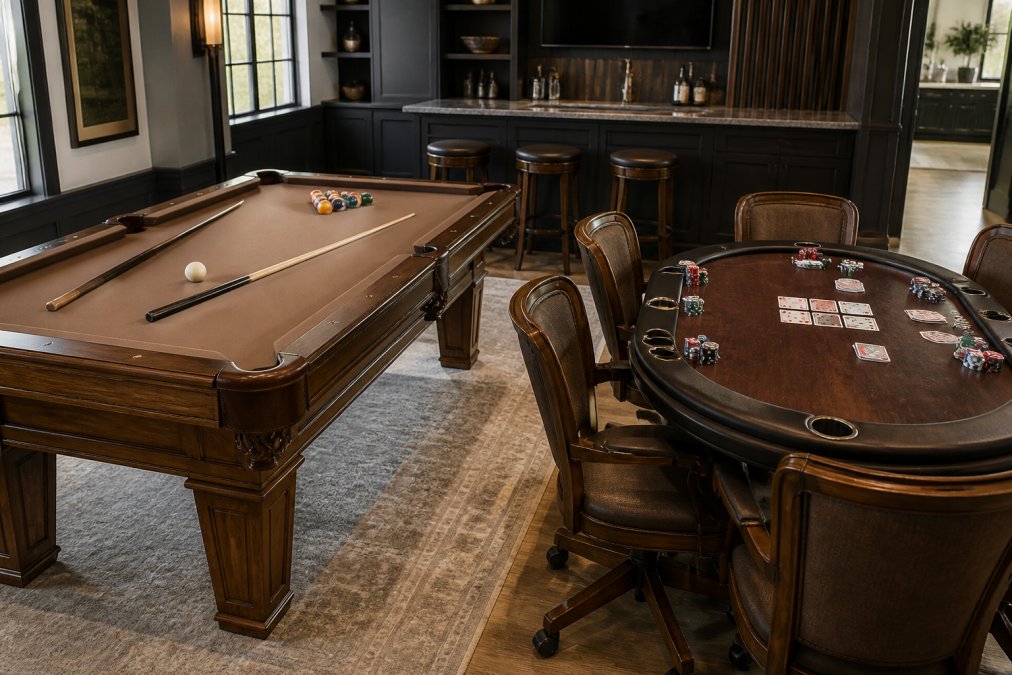
Pool tables are a good example of why shoppers should look beyond the visible exterior. Depending on the model, relevant specifications may include the playing-surface material, slate configuration and thickness, cloth, rails, cushions, frame construction, and cabinet materials. Review the specifications for the individual table, since materials and construction vary by model and manufacturer.
Materials to Consider by Furniture Type
The materials worth evaluating will vary depending on the type of game room furniture you're buying. For pool tables, look at the playing surface, cloth, rails, cushions, frame, and cabinet construction. With poker tables, consider the tabletop or playing surface, frame, rail materials, upholstery or padding where applicable, and any folding or convertible components. For foosball tables, review the cabinet, playing surface, rods, legs, and hardware. Home bar furniture may include a combination of wood, engineered materials, metal, glass, upholstery, and surface finishes. Rather than looking for one preferred material across every category, focus on whether the materials and construction make sense for the furniture's intended use.
Choosing durable game room furniture involves more than looking for a particular material on the product description. Consider how the materials are used, how the piece is constructed and finished, what maintenance it may require, and how it will be used in your home. Comparing those details can help you choose furniture that fits your space, priorities, and expectations. Explore the game room furniture at Lounge Apex to compare materials, construction details, and features across available products.
Frequently Asked Questions
What is the best material for a durable game room table?
There is no single best material for every game room table. The right choice depends on the type of table, how it will be used, maintenance preferences, appearance, and budget. Look at both the visible materials and the structural components, including the frame, panels, playing surface, hardware, and finish where applicable. Compare the manufacturer's specifications for the individual piece rather than choosing based on one material label alone.
How does construction quality affect game room furniture durability?
Material and construction should be considered together. Joinery, fasteners, hardware, frame design, and finish all contribute to how a piece is assembled and functions. When specifications are available, review these construction details alongside the materials used, and follow the manufacturer's guidance for placement, use, and care.
What should I look for in home theater seating materials?
When choosing home theater seating, consider the upholstery material, cushion construction, frame, support features, and reclining mechanisms where applicable. Leather, faux leather, and fabric options can differ in feel, appearance, and care requirements. Review the manufacturer's specifications and care instructions for the individual seating, and confirm that the seat dimensions and features suit your room and intended use.


