Creating an Elegant Home Bar Space: Design & Setup
Table of Contents
- Why a Home Bar Becomes a Gathering Place
- Home Bar Furniture Essentials: Building the Foundation
- Small Home Bar Layout Ideas That Maximize Space
- Best Lighting for Home Bars: Setting the Right Mood
- Materials and Finishes That Elevate Your Bar Aesthetic
- Organization and Flow: Designing for Entertaining
- Thoughtful and Budget-Conscious Choices
- Frequently Asked Questions
Last Updated: September 28, 2026
Why a Home Bar Becomes a Gathering Place
A well-designed home bar does more than serve drinks. It creates a focal point where entertaining happens naturally. Guests gravitate toward it. Conversations linger. The space itself signals that time together matters.

Creating an elegant home bar space transforms how you entertain. It's not about having the fanciest bottles or the most tools. It's about designing a space that feels intentional, comfortable, and reflective of how you actually live. The best home bars balance function with aesthetics. They make it easy to prepare drinks without feeling cramped. They encourage guests to settle in and stay.
At Lounge Apex, we believe entertaining spaces deserve the same thoughtfulness as the rest of the home. A home bar should complement your design, not dominate it. It should work for your space, your lifestyle, and the way you like to entertain.
This guide covers the practical decisions that shape a successful home bar. From furniture and layout to lighting and materials, each choice affects how the space feels and functions.
Home Bar Furniture Essentials: Building the Foundation
Every home bar needs a core set of pieces. The right foundation makes everything else fall into place.
The Bar Cabinet or Counter
The bar itself is the anchor. It's where you prepare drinks and where guests gather. Your choice here shapes the entire space.
A full-height bar cabinet creates a dedicated entertaining zone. It provides storage, a work surface, and clear separation between the bar area and the rest of the room. This works well in basements, game rooms, or bonus rooms where you have the space.
The Prohibition 84-Inch Cocktail Home Bar brings the character of an upscale cocktail lounge into a residential setting. Its curved profile and contrasting finishes create a sophisticated focal point. At 84 inches, it offers generous space for preparing drinks and organizing bottles. The Prohibition 60-Inch Cocktail Home Bar works beautifully when space is tighter. Both models come in finishes that suit different aesthetics: Matte Black with brass accents for dramatic Art Deco style, or Matte Walnut with black accents for warmer, more residential character.

For smaller spaces, a bar cabinet with closed storage offers style without overwhelming the room. The Wrought Studio Ermo LED Wine & Coffee Bar Cabinet combines a beverage station with ambient lighting. Its glass-front cabinets display glassware while keeping bottles and tools organized inside. This approach works in dining rooms, living rooms, or entertainment spaces where you want a sophisticated beverage station without a full bar footprint.
The Gracie Oaks Shik Industrial Bar Cabinet brings modern simplicity. Its rustic dark-brown finish pairs with a stainless-steel base. Open shelving keeps frequently used items accessible. Concealed cabinets store less-used bottles and equipment. This design works well when you want function without visual clutter.
Consider your space first. Measure carefully. A bar that's too large for the room feels imposing. One that's too small limits how comfortably you can work and entertain.
Seating and Comfort
Seating transforms a bar from a preparation surface into a gathering space. Stools at the bar invite guests to sit, watch, and chat while you prepare drinks.
Choose stools that suit the height of your specific bar. Counter-height and bar-height seating are not interchangeable, so check the bar's dimensions and the stool's seat height before purchasing. Allow enough space between the seat and the underside of the bar for comfortable legroom. Swivel stools make conversation easier. Backs provide comfort for longer gatherings. Footrests are essential; they make sitting at bar height more comfortable.
Material matters. Upholstered seats feel more residential and comfortable for extended sitting. Leather or performance fabrics resist stains and spills. Metal or wood stools suit industrial or modern aesthetics but offer less cushioning.
Beyond bar seating, consider additional seating nearby. A small table with chairs, a lounge chair, or a sectional gives guests options. Not everyone wants to sit at the bar. Some prefer to settle in a nearby spot with a drink in hand.
The arrangement should feel natural. Guests should be able to move between the bar and other seating without awkward traffic patterns.
Small Home Bar Layout Ideas That Maximize Space
Not everyone has a dedicated room for a home bar. Smart layout makes the difference between a cramped corner and a functional entertaining space.
Corner and Nook Solutions
A corner bar uses space efficiently. It fits naturally into existing rooms without requiring dedicated square footage. Consider how the bar's orientation affects traffic flow, seating, and sightlines within the larger room. Depending on the design, a bar may work well against a wall, tucked into a corner, or positioned to face into the surrounding entertainment space.
Nook bars work well in bonus rooms, finished basements, or under staircases. A narrow bar cabinet tucked into an alcove becomes a sophisticated beverage station without eating into the room's layout.

Floating shelves above a small countertop create a bar without requiring floor space for a cabinet. Open shelving displays glassware and bottles while keeping the space feeling airy. The trade-off: bottles and tools are visible, so organization matters more.
Consider the wall behind the bar. A backsplash adds visual interest and protects the wall from spills. Mirrors amplify light and make the space feel larger. Wallpaper or paint creates a distinct entertaining zone within a larger room.
Open Shelving vs. Closed Cabinetry
Open shelving displays bottles, glassware, and barware. It looks curated and accessible. Everything is visible, so you need fewer pieces, and they must be intentional.
Open shelving works when your collection is modest, and your aesthetic is modern or minimalist. It requires regular tidying. Dust settles on bottles. Glassware needs frequent cleaning. This style suits people who enjoy maintaining a polished look.
Closed cabinetry hides the everyday mess. Bottles stay organized inside. Less-used tools stay out of sight. This approach works better for active entertaining spaces where efficiency matters more than display.
Many home bars use both. Open shelving displays favorite bottles and beautiful glassware. Closed cabinets store backup bottles, mixers, and tools. This balance gives you the visual appeal of display with the practical storage of concealed space.
Consider your lifestyle and how much you want to keep on display. Open shelving works well when you enjoy a curated, visible collection, while closed storage offers a lower-maintenance way to keep bottles, tools, and other essentials organized and out of sight.
Best Lighting for Home Bars: Setting the Right Mood
Lighting shapes how a home bar feels. It's the difference between a functional space and one that invites lingering.
Ambient lighting sets the overall mood. Dimmable overhead lights let you adjust brightness for different occasions. Bright light works for game nights and active entertaining. Softer light creates intimacy for evening gatherings.
Task lighting illuminates the bar surface for drink preparation. Under-cabinet lighting or pendant lights above the bar make mixing easier. This layer of lighting prevents shadows and keeps the bartender comfortable.
Accent lighting highlights the bar itself. LED strips behind floating shelves create a moody glow. Backlighting makes bottles and glassware stand out. Uplighting on the bar cabinet adds drama and sophistication.
Layered lighting gives you control. Combine overhead lights, task lighting, and accent lighting on separate switches. You can adjust the combination to match the moment.
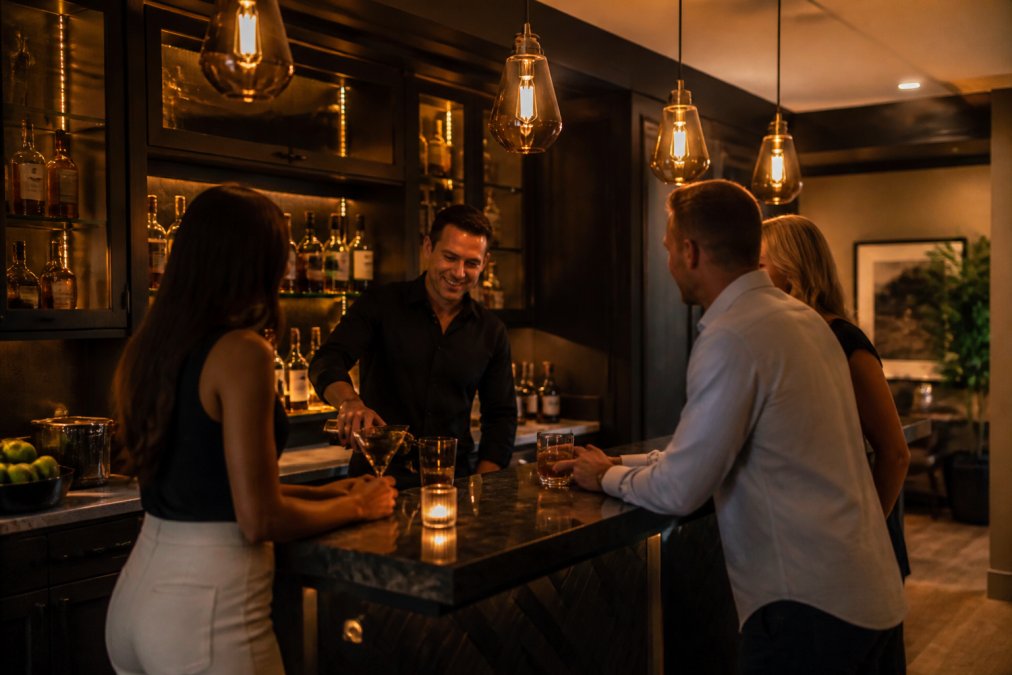
Color temperature affects the mood. Warm light (2700K-3000K) feels inviting and intimate. Cool light (4000K and above) feels crisp and modern. Most home bars benefit from warm lighting. It flatters people and creates a lounge-like atmosphere.
Consider the finishes in your bar. Brass accents glow beautifully in warm light. Matte black finishes create drama with accent lighting. Walnut wood tones warm up under soft illumination.
Materials and Finishes That Elevate Your Bar Aesthetic
Material choices affect both how a home bar looks and how it functions. The goal is to choose finishes that complement the surrounding room while also standing up to regular entertaining.
Wood finishes bring warmth and can help a bar feel like a natural extension of the home's furniture. Darker woods can create a more traditional or dramatic atmosphere, while lighter and medium tones often feel more relaxed and contemporary. Painted finishes, matte black details, and metal accents can shift the look toward modern, industrial, or Art Deco-inspired spaces.
For surfaces that may be exposed to spills, prioritize finishes that are practical to clean and maintain. The specific care requirements will depend on the materials used by the manufacturer, so check the product's care instructions before using cleaners or treatments.
You don't need every finish in the room to match. A more cohesive approach is to repeat a few elements—such as a wood tone, metal finish, or accent color—across the bar, seating, lighting, and nearby furniture. This creates visual continuity without making the space feel overly coordinated.
When choosing a bar, start with the room you already have. A statement piece can provide contrast, while a quieter finish can blend into an established interior. Either approach can work when the materials feel intentional within the larger space.
Organization and Flow: Designing for Entertaining
A functional home bar makes entertaining easier because the things you use most are placed where you naturally reach for them. Think about the order in which you prepare and serve drinks, then organize the space around that routine.
Keep frequently used glassware, tools, and serving essentials close to the main work surface. Items used less often can move to lower cabinets, closed storage, or a nearby bar cabinet. The goal is to avoid crossing the room repeatedly while you're entertaining or crowding the countertop with things you don't need.
Traffic flow matters too. Guests should be able to approach the bar, take a seat, or move to another part of the room without interfering with the person preparing drinks. Leave comfortable pathways around stools and nearby furniture, particularly in smaller entertainment spaces.
If more than one person regularly uses the bar, think in zones. One area can hold glassware and serving pieces, another can provide preparation space, and another can handle storage. Even a compact bar feels more organized when each area has a clear purpose.
Good organization should make the bar feel effortless rather than overly arranged. When storage, seating, and movement work together, the host can spend less time managing the space and more time enjoying the people in it.
Thoughtful and Budget-Conscious Choices
Creating an elegant home bar doesn't require buying everything at once. A more thoughtful approach is to invest first in the pieces that have the greatest effect on how the space functions, then add to the room over time.
Start with the foundation: a bar or cabinet that fits the available space, appropriate seating if the layout allows for it, and enough storage to keep the area organized. Lighting, décor, additional shelving, and specialty accessories can be added later as you learn how you actually use the space.
When comparing furniture, look beyond the initial price. Consider dimensions, storage capacity, versatility, materials, and how well the piece fits your long-term plans for the room. A convertible or multi-purpose piece may make sense when space is limited, while a dedicated statement bar may be worth prioritizing in a room designed primarily for entertaining.
You can also make use of pieces you already own. Existing shelving, artwork, mirrors, lighting, or serving pieces can help complete the space without replacing everything simply to achieve a new look. Reusing what works can reduce unnecessary purchases while giving the room a more personal, collected feel.
Set the room up in stages rather than treating the home bar as something that must be finished all at once. A well-planned space can evolve as your entertaining habits, storage needs, and personal style become clearer.
Frequently Asked Questions
What are the essential furniture pieces for an elegant home bar?
The foundation includes a quality bar cabinet or counter, seating for guests, and storage for bottles and glassware. The bar itself should provide workspace for preparing drinks and a display surface for your collection. Add bar stools or chairs that complement your design, and consider a back bar or shelving for visual interest. The specific pieces depend on your space and entertaining style. A compact bar cabinet works well in smaller areas, while a full-size bar may suit a dedicated entertainment space.
How can lighting transform the atmosphere of a home bar space?
Lighting shapes how your bar feels and functions. Ambient lighting creates a welcoming mood; task lighting illuminates the bar surface for drink preparation; and accent lighting highlights your bottle collection or architectural details. Dimmers let you adjust brightness for different occasions. LED strips behind shelving or under countertops add sophistication without overwhelming the space. Warm color temperatures (2700K–3000K) feel inviting, while cooler tones read as more modern.
How do you design a home bar that feels sophisticated rather than cluttered?
Sophistication comes from intentional curation and clear organization. Limit your bottle display to what you actually use and enjoy; store excess inventory behind closed doors. Use matching glassware and barware to create visual cohesion. Keep countertops and open shelves uncluttered by storing daily essentials in accessible but concealed storage. Choose a color palette of two or three tones and stick to it. A smaller number of thoughtfully chosen pieces can often create a more cohesive look than an overcrowded display.
How much does it cost to create a home bar?
Costs vary widely depending on the size of the space, the type of bar furniture you choose, and how much of the room you're furnishing at once. A compact bar cabinet can provide a practical starting point, while a dedicated entertainment space may include a full-size bar, seating, storage, lighting, and décor. Many homeowners build their space in stages. Start with the pieces that matter most to how you plan to entertain, then add to the room over time as your needs and preferences become clearer.
A well-designed home bar should make entertaining feel easier while fitting naturally into the way you use your space. Whether you're creating a compact beverage station or a dedicated gathering area, start with the right foundation and build from there. Explore the Lounge Apex home bar collection to find furniture designed for thoughtful, comfortable entertaining.