


Home Poker Tournament for Beginners: How to Host a Great Night
Last Updated: November 13, 2026
Quick Summary
Hosting a home poker tournament is a wonderful way to bring friends and family together for an entertaining evening. For beginners, the key is keeping the format simple, preparing the playing area, and establishing clear house rules before the first hand. A friendly Texas Hold'em tournament with equal starting chip stacks, scheduled blind increases, and comfortable seating can create an enjoyable experience for everyone, regardless of skill level.
- Keep blind levels at 15 minutes each, starting at 25/50 and rising steadily through the schedule.
- Schedule a short break every four levels and keep snacks simple.
- Post short house rules where everyone can see them, including no string betting.
- Slow the blinds slightly at heads-up so the finish feels earned.
- Sort chips into starting stacks before guests arrive.
Table of Contents
- Planning Your Home Poker Tournament Structure
- Poker Setup: Chips, Cards, and a Comfortable Table
- Poker Rules, Etiquette, and a Welcoming Game
- Hosting Tips for a Smooth Evening
- Tournament Preparation Checklist
- Create a Poker Night Worth Remembering
- Frequently Asked Questions
Planning Your Home Poker Tournament Structure
A home poker tournament is a single-elimination event where every player starts with the same chip stack and plays until one person holds all the chips. This guide covers how to organize a home poker tournament for beginners, from invitation to final hand.
For a beginner-friendly Texas Hold'em tournament, give each player a starting stack worth 2,000 tournament chips. These chips represent points for play rather than money. Begin with blinds of 25/50 and increase them every 15 minutes using the example schedule below.
The small blind and big blind are mandatory bets that help move the game forward. Players who are new to poker may appreciate a brief explanation of these terms before the first hand.
This sample schedule is intended as a starting point for a casual gathering. You can adjust the pace to suit your guests and the time available.
Level |
Small Blind |
Big Blind |
Duration |
|---|---|---|---|
1 |
25 |
50 |
15 minutes |
2 |
50 |
100 |
15 minutes |
3 |
75 |
150 |
15 minutes |
4 |
100 |
200 |
15 minutes |
5 |
150 |
300 |
15 minutes |
6 |
200 |
400 |
15 minutes |
For a beginner-friendly home poker tournament, consider playing entirely for fun, without entry fees or cash prizes. Give every participant the same starting chip value and explain the tournament format before play begins.
Establish a few simple house rules, including how blind levels increase, whether eliminated players can rejoin, and how the winner will be determined. For a relaxed gathering, you might recognize the winner with a small trophy, a playful title, or simply bragging rights until the next poker night.
Keeping the focus on friendly competition and shared enjoyment helps create a welcoming atmosphere for players of all experience levels.
If the room needs a centerpiece, browse home poker tables for hosting to see options built for a full table of players.
Blind levels in a beginner home poker tournament
Poker Setup: Chips, Cards, and a Comfortable Table
Poker night setup starts with the right gear: chips in clear denominations, two fresh decks, a dealer button, and a timer for blind levels. Sort chips into stacks before guests arrive.
A dedicated home poker table can make the evening more comfortable and organized, with padded rails for arm support and cup holders that keep drinks away from the felt.
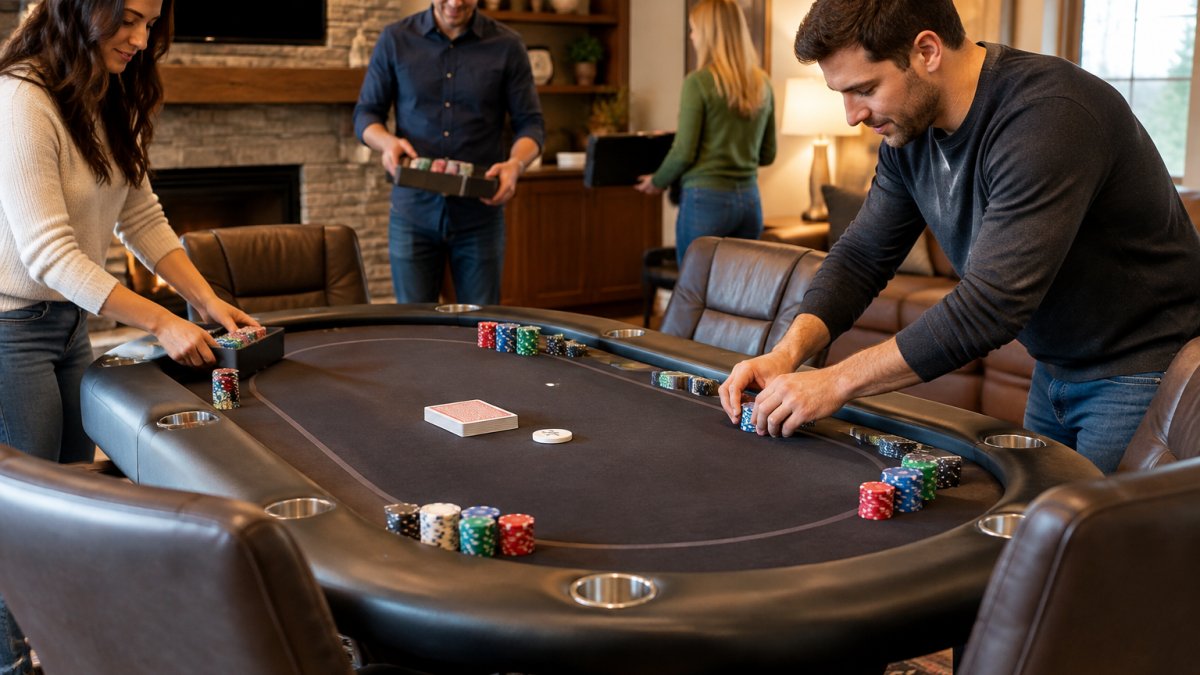
A Poker Table That Elevates the Experience
A dedicated poker table can bring both function and character to your entertainment space. Beyond providing a designated playing surface, the right table helps create an inviting atmosphere where guests can gather comfortably and enjoy the evening.
For homeowners seeking a distinctive design, the RAM Game Room Prohibition Texas Hold'em Poker Table is worth exploring. Its Prohibition-inspired styling offers an appealing option for a dedicated game room or sophisticated entertainment setting.
When selecting a poker table, consider the available seating space, table dimensions, playing surface, and how the design complements your room. A thoughtfully chosen table can become the centerpiece of many memorable gatherings.
Before buying, read what to consider beyond the look, covering seating, room layout, and dining-top storage. A guide to choosing poker table felt color explains how room lighting affects the choice.
Poker Rules, Etiquette, and a Welcoming Game
Poker rules for a beginner-friendly game should be short and posted where everyone can see them: no string betting, announce raises clearly, and keep cards above the table.
Table etiquette keeps the night friendly:
- Deal in turn and keep the dealer button moving
- Avoid slow play and side conversations during a hand
- Settle disputes with the tournament director, not the loudest voice
- Thank players as they bust out
Beginners will make mistakes. A calm correction beats a lecture every time.
Hosting Tips for a Smooth Evening
Pacing separates a good poker tournament for beginners from a long night. Schedule a short break every four levels, keep snacks simple, and set drinks away from the felt.
Keep guests engaged between hands with light conversation and a visible tournament clock. When play narrows to heads-up, slow the blinds slightly so the finish feels earned.
Tournament Preparation Checklist
- Confirm the date and player count
- Decide on a friendly tournament format, starting chip values, and how the winner will be recognized.
- Print the blind schedule and house rules
- Sort chips into starting stacks
- Set up the table with cards, button, and cup holders
- Arrange snacks and drinks away from the playing surface
- Test the timer or tournament clock
Create a Poker Night Worth Remembering
A memorable home poker tournament is about more than the cards. Thoughtful preparation, comfortable seating, and a welcoming atmosphere can turn a simple evening with friends into a tradition everyone looks forward to.
Whether you're hosting your first tournament or creating a dedicated entertainment space, the right furnishings can make gathering around the table even more enjoyable.
At Lounge Apex, we believe exceptional home entertainment begins with bringing people together. Explore our Poker Tables Collection to discover designs that complement your space and elevate your next game night.
Frequently Asked Questions
How many chips should each player start with in a home poker tournament?
For a beginner-friendly home poker tournament, a starting stack worth 2,000 tournament chips per player is a practical option. This refers to the total value of the chips, not the number of individual chips each player receives. For example, each player could start with eight chips valued at 25, eight valued at 100, and two valued at 500, creating a total starting value of 2,000. Give every participant an identical starting stack and prepare the chips before guests arrive. Using clearly marked denominations makes betting easier to follow and helps beginners feel more comfortable at the table.
What is a good blind schedule for a beginner home poker tournament?
For a beginner-friendly home poker tournament, consider giving each player a starting stack worth 2,000 tournament chips and beginning with small and big blinds of 25/50. Increase the blinds every 15 minutes, following a simple schedule such as 25/50, 50/100, 75/150, 100/200, 150/300, and 200/400. Display the blind schedule where everyone can see it and use a timer to announce each new level. For a more relaxed evening, consider extending the levels to 20 minutes, allowing beginners additional time to make decisions and enjoy the experience.
What are the basic house rules for a home poker tournament?
Keep house rules short and clear: no string betting, announce raises, protect your cards, and act in turn. Decide in advance how rebuys or add-ons work, when the tournament ends, and how ties are handled. Write the rules on a single sheet and review them before the first hand. Clear poker rules help beginners feel confident and reduce disputes, which keeps the evening welcoming for everyone at the table.







