


3 Home Theater Cost Tiers: What to Budget
Last Updated: November 5, 2026
Quick Summary
There is no single home theater cost, because the total depends less on the screen than on the room around it. Budgets fall into three tiers: entry-level in a finished room, mid-range with light upgrades, and high-end with new construction or major renovation.
- Home theater costs vary depending on room size, equipment choices, seating configuration, and whether construction or renovation is required.
- Planning your seating layout early helps determine viewing distances, reclining clearance, and the space available for other furnishings.
- Entry-level, mid-range, and high-end home theaters involve different levels of equipment, customization, and installation.
- Consider setting aside a contingency of approximately 10–20% for unexpected expenses, particularly when renovating an existing space.
- Professional installation, electrical work, acoustic treatments, and custom finishes can significantly affect the overall project budget.
Table of Contents
- What the Average Home Theater Cost Breaks Down To
- Using a Home Theater Cost Calculator to Plan Your Budget
- Labor Cost for Home Theater Installation and Build-Out
- The Bottom Line on Home Theater Cost
- Frequently Asked Questions
What the Average Home Theater Cost Breaks Down To
Planning a home theater budget begins with understanding the space you want to create. Room dimensions, seating arrangements, equipment selections, and the extent of any renovations can all influence the overall investment.
Consider your seating layout alongside your display and audio equipment rather than treating furnishings as an afterthought. The number of seats, viewing distances, and reclining clearance can help determine how comfortably everything fits together. Explore our home theater seating collection to compare available configurations.
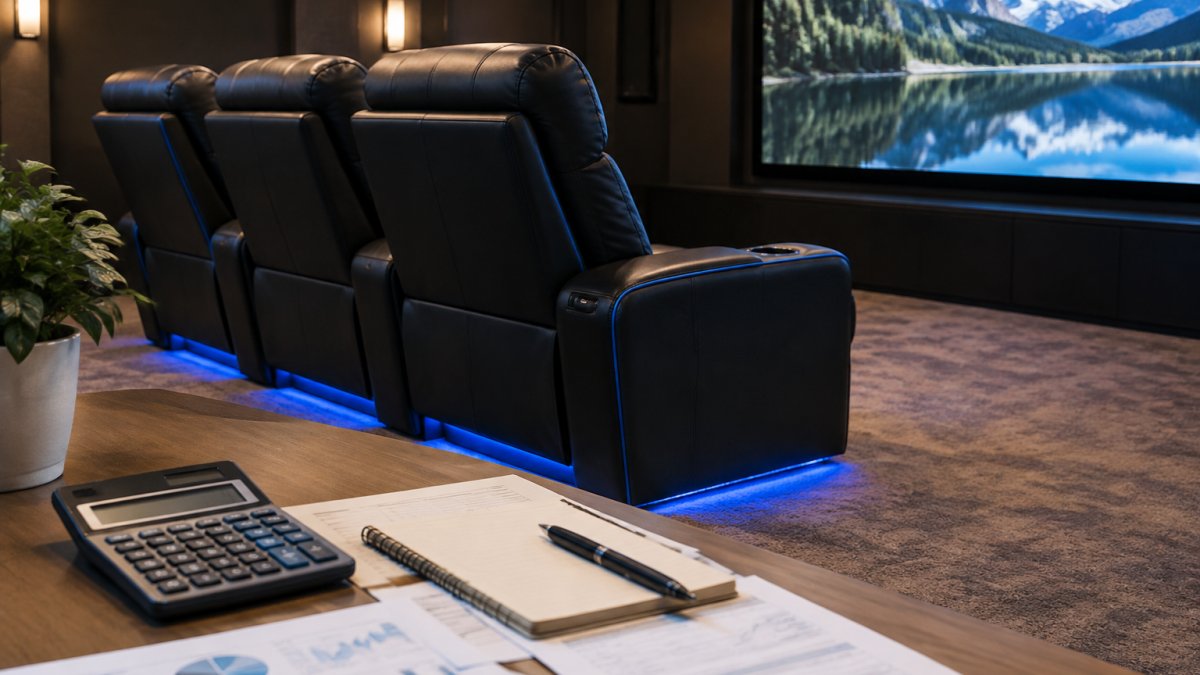
The three tiers, in plain terms:
Home Theater Tier |
Typical Project Scope |
Primary Budget Considerations |
|---|---|---|
Entry-Level |
An existing living room, bonus room, or media space using a television, basic audio equipment, and comfortable seating |
Television or display, audio, seating, and minor room adjustments |
Mid-Range |
A more dedicated entertainment space with upgraded audio, a larger display or projector, theater-style seating, and lighting improvements |
Equipment upgrades, seating configuration, electrical work, lighting, and installation |
High-End |
A dedicated home theater featuring premium equipment, immersive audio, acoustic treatments, customized lighting, and refined interior finishes |
Specialized equipment, multiple seating rows, acoustic design, construction, professional installation, and custom furnishings |
The jump between tiers is rarely about one component; it is about how much of the room gets rebuilt. A matte black wood slat acoustic panel set is an accessible way to start, and the home theater collection covers seating, consoles, and room furnishings in one place.
Using a Home Theater Cost Calculator to Plan Your Budget
A home theater cost calculator can help you organize expenses and establish a realistic planning budget. Rather than relying on a single average price, begin by identifying whether you're furnishing an existing room, making modest upgrades, or creating a dedicated home theater.
Break your budget into categories such as display equipment, audio components, seating, lighting, room furnishings, professional installation, and any necessary construction or electrical work. Use current product prices and local contractor estimates whenever possible.
For projects involving renovations or construction, consider setting aside an additional 10–20% for unexpected expenses. If you're furnishing an existing room without structural changes, focus on the equipment, seating, and accessories you actually need.
Remember to account for delivery, installation, and any manufacturer-specific services when comparing your options. A well-planned budget should reflect both your entertainment priorities and the practical requirements of your space.
Labor Cost for Home Theater Installation and Build-Out
Professional installation and labor costs can vary significantly depending on the complexity of your home theater project. Furnishing an existing media room may require minimal installation, while creating a dedicated theater can involve electrical work, custom cabinetry, acoustic treatments, lighting, and structural modifications.
When planning your budget, distinguish between equipment installation and construction-related labor. Mounting a television, installing speakers, or configuring audio equipment involves different services than remodeling an entire room.
For larger projects, request detailed estimates from qualified local professionals and clarify which services are included. Electrical work, permits, and inspections may be required depending on your location and project scope.
Before purchasing home theater seating or furnishings, also review delivery access, assembly requirements, and any available installation services. These considerations can help prevent unexpected expenses and ensure a smoother setup process.
The Bottom Line on Home Theater Cost
A home theater budget is really a room budget. Decide how much of the space you will rebuild, price seating and equipment from real products rather than averages, and hold back a contingency for what the walls hide.
At Lounge Apex, we believe a thoughtfully designed home theater should balance comfort, functionality, and personal style. Our curated selection of home theater seating and entertainment furnishings helps homeowners create spaces designed for movie nights, sporting events, and memorable gatherings. Because delivery options, installation services, and return policies may vary by manufacturer and product, we encourage customers to review the details provided on each product page before purchasing. Start with a seating arrangement that complements your room, then build the rest of your entertainment space around it.
Frequently Asked Questions
What factors affect the average home theater cost?
Room size, whether you renovate or build new, equipment tier, acoustic treatment, wiring, and seating all move the number significantly. A simple media room setup costs far less than a fully constructed dedicated theater with soundproofing and custom cabinetry. Labor rates and permitting also vary by location, so get local quotes before you commit to a budget.
How much does home theater seating add to the total?
Home theater seating costs vary depending on the number of seats, upholstery materials, reclining features, and overall configuration. A simple loveseat or sofa may require a smaller investment, while individual power recliners, multi-seat arrangements, and premium theater seating can represent a larger portion of the budget. When planning your seating budget, consider how many people you typically entertain, the available floor space, and features that matter most to your household. Measure doorway widths, seating depth, and reclining clearance before making a selection. Explore the Lounge Apex home theater seating collection to compare available styles, configurations, and current pricing.
Can you build a home theater in an existing room?
Yes. Many homeowners start with an existing bonus room or basement and skip major construction. You can prioritize display, audio, and seating first, then add acoustic treatment and lighting later. This staged approach spreads the cost over time and lets you upgrade components as your budget allows.







