


How to Choose Durable Game Room Furniture
Table of Contents
- How to Choose Game Room Furniture: A Durability Framework
- Game Room Furniture Materials: Solid Wood, Engineered Wood, and Metal
- Pool Table Construction and What It Reveals About Durability
- How Durability Needs Differ by Furniture Type
- Space, Layout, and Load Considerations
- Maintenance and Long-Term Care
- Questions to Ask Before You Buy
- Frequently Asked Questions
Last Updated: October 13, 2026
How to Choose Game Room Furniture: A Durability Framework
Choosing durable game room furniture starts with one question: what will this piece endure? A poker table used monthly faces different demands than a pool table used daily.
Durability is three qualities: structural stability, surface resilience, and maintenance tolerance. A piece can score well on one and poorly on another.
Game Room Furniture Materials: Solid Wood, Engineered Wood, and Metal
Material choice influences how furniture performs over time, but no single material is best for every application. Solid hardwood can offer strength and refinishing options, depending on the species and finish. Engineered wood products vary in construction, moisture resistance, and durability. Metal components can provide structural support, although their quality and performance depend on the design and finish.
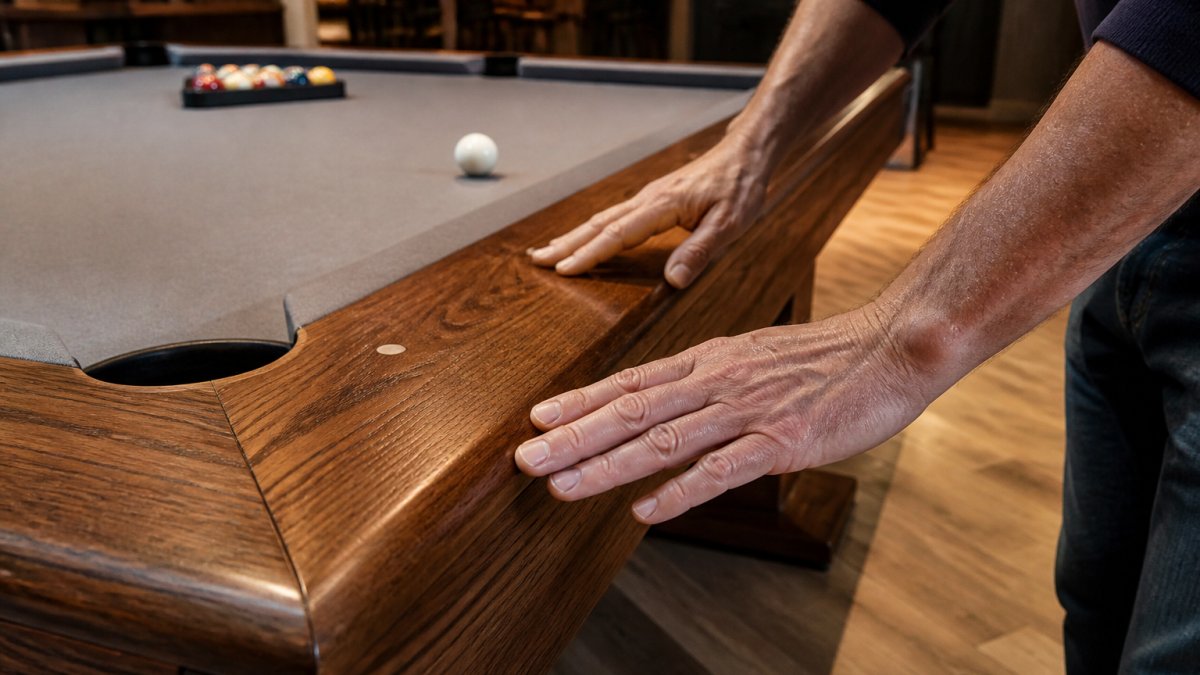
What matters is where each material sits in the build: load-bearing parts need stiffness, decorative panels do not. Ask which parts carry weight, whether the finish is sealed, and whether moving parts are replaceable.
Pool Table Construction and What It Reveals About Durability
Pool table durability depends on how the playing surface, frame, rails, and other components work together to maintain stability and consistent play. Check slate thickness and piece count, rail material and cushion type, pocket construction, and total weight against what the floor can support. Weight shapes delivery and placement, so plan the route into the room before arrival.
U.S. Consumer Product Safety Commission guidance on furniture tip-over prevention offers useful context on stability and anchoring, which matters in rooms used by children.
How Durability Needs Differ by Furniture Type
Every game room piece wears differently. Treating a foosball table like a poker table leads to the wrong buying criteria.
Furniture Type |
Main Wear Point |
What to Inspect |
|---|---|---|
Pool table |
Slate, rails, cloth |
Slate thickness, rail construction, frame stability, and level playing surface. |
Poker table |
Playing surface, rail padding |
Upholstery quality, cup holder fit, base stability |
Foosball table |
Rods, bearings, players |
Rod straightness, bearing type, frame rigidity |
Game tables |
Surface finish, hinges |
Sealed finish, hardware quality, folding mechanisms |
Tops, drawers, footrests |
Counter surface, drawer glides, joint construction |
Poker tables live or die by their playing surface and rail; foosball tables hinge on moving parts, check how rods are supported and whether bearings can be replaced. Home bar furniture faces spills and foot traffic, so a sealed top and solid drawer glides matter more than ornamentation.
Space, Layout, and Load Considerations
Measure the room before choosing the furniture. A pool table needs clearance on all sides for a full cue stroke. Poker tables need room for chairs to pull back. Bar furniture needs a clear path for traffic.
Then check the floor. Heavy pieces concentrate load on a small footprint, so in basements, bonus rooms, and lofts, confirm what the floor can bear and consult a qualified professional when unsure.
Measure the delivery path (doorways, stairs, turns), confirm ceiling height and clearance for drawers and chairs, and check floor type and moisture concerns.
U.S. Department of Energy guidance on moisture control in basements explains why humidity matters in the rooms where game furniture often lives.
Maintenance and Long-Term Care
Maintenance needs vary by material and finish, so manufacturer care instructions should guide every decision. General habits that help most pieces: wipe spills promptly, keep cloth and upholstery dry, tighten hardware routinely, and keep the room at stable temperature and humidity. Cosmetic wear is normal; a scuff on a leg is not the same as a loose joint.
Questions to Ask Before You Buy
Bring a short list to any purchase. These questions separate quality game room furniture from furniture that only looks the part: How often will this piece be used, and by whom? Will children, guests, or pets use it regularly? Does it fit the room and the delivery path? What does the maker say about cleaning and care? Are moving parts and hardware replaceable? What is the return policy if it does not suit the space?
Return and delivery terms are also worth reviewing before purchasing. Policies may vary by product or supplier, particularly for larger furniture and specialty items. Check the applicable shipping, return, and delivery information before placing an order.
Frequently Asked Questions
What should I look for in durable game room furniture?
Start with the frame and joinery, not the finish. Ask what the frame is made of, how the joints are secured, and whether hardware and moving parts are replaceable. For pool tables, confirm the slate thickness and whether rails are solid wood. For poker tables, check the rail padding and cup holder construction. Consider whether commonly used components can be inspected, maintained, or replaced when necessary, and confirm what the manufacturer recommends for ongoing care.
Is solid wood or engineered wood better for game room furniture?
Neither is universally better. Solid wood can be sanded and refinished, which helps with cosmetic wear over time. Engineered wood can resist seasonal movement and may cost less, but it cannot always be refinished the same way. What matters most is how the material is used: a solid wood frame with quality joinery and a stable top often outperforms a solid wood piece with weak construction. Ask about the specific material and how it is assembled.
How often should game room furniture be maintained?
Follow the manufacturer's care instructions first, since requirements vary by material and finish. In general, dust hard surfaces regularly, wipe spills promptly, and check hardware and moving parts periodically for looseness. Upholstered pieces may need vacuuming or spot cleaning. Pool table cloth and rails benefit from brushing and inspecting for wear. Maintenance frequency depends on how often the room is used and whether children or pets share the space.
A well-designed game room starts with furniture chosen for the way the space will be used. By considering construction, materials, maintenance, and layout, you can select pieces that balance lasting functionality with your personal style.
Explore Lounge Apex's curated selection of game room furniture, pool tables, poker tables, and home bar pieces to find options suited to your space.


