


How to Design a Sophisticated Home Game Room in 7 Steps
Last Updated: October 30, 2026
Quick Summary
A sophisticated home game room balances play, rest, and conversation, and it starts with deciding how you will actually use the space. Plan the layout around your main activity, such as billiards, card games, or casual lounging, then choose furniture, lighting, and finishes that serve that use without cluttering the room.
- Identify the main activity first, since it determines how much space the room needs.
- Measure the room and the table footprint, then leave clear walking paths on every side.
- Verify table clearances with the manufacturer's specifications, because they vary by table.
- Choose furniture that serves a real need and compare construction, finish, and dimensions against your room.
- Use dimmable lighting so the room can shift from play to conversation, and keep finishes consistent.
Table of Contents
- Planning the Home Game Room Layout Around How You Will Use It
- Choosing Game Room Furniture That Balances Comfort and Style
- Setting the Scene: Lighting, Finishes, and Finishing Touches for a Refined Space
- Frequently Asked Questions
Designing a sophisticated home game room starts with a simple question: how will you actually use it? The right room balances play, rest, and conversation without feeling cluttered.
Planning the Home Game Room Layout Around How You Will Use It
A well-planned layout starts with the activities you want the room to support. A pool table needs open space around it for cue movement, so measure the table footprint and leave clear walking paths on every side. Confirm the exact clearances with the manufacturer's specifications, since they vary by table.
- Identify the main activity: billiards, card games, or casual lounging
- Note where guests will sit and walk
- Measure the room before you shop
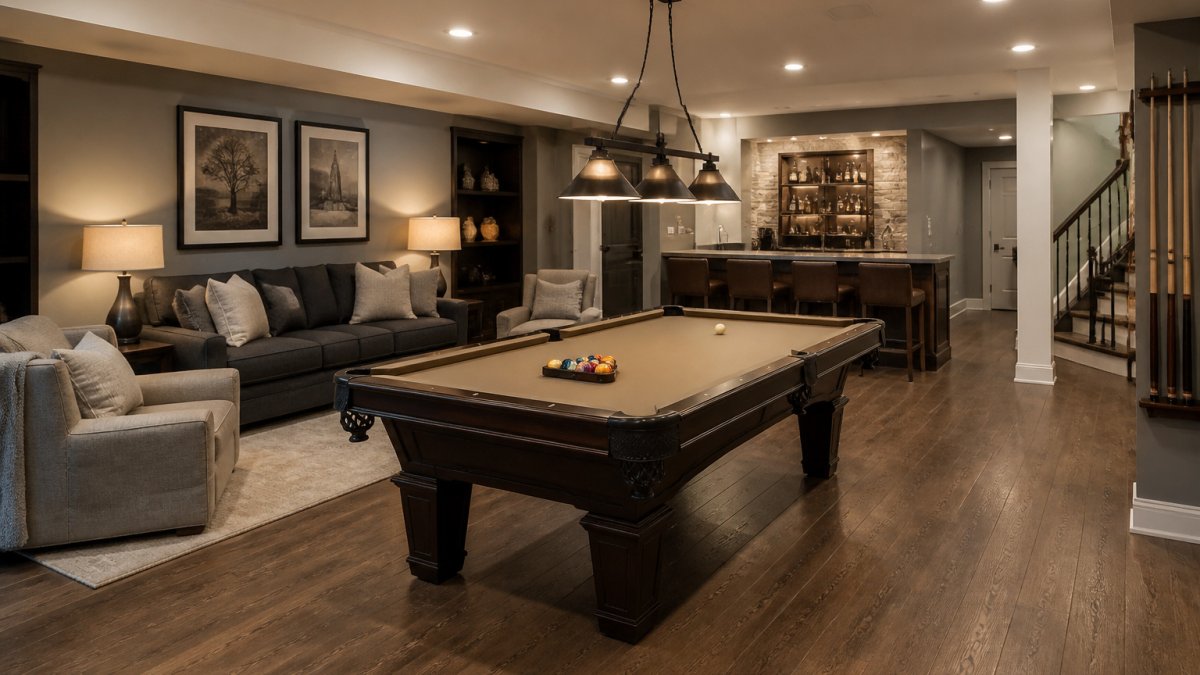
The main activity you plan for largely determines how much space the room needs and where everything should go.
| Main activity | What it needs | Planning step |
|---|---|---|
| Billiards | Open space for cue movement | Measure the table footprint and leave clear walking paths |
| Card games | Seating and room for guests to move | Note where guests will sit and walk |
| Casual lounging | Comfortable seating and open walkways | Measure the room before you shop |
Choosing Game Room Furniture That Balances Comfort and Style
Furniture should earn its place by serving a real need. Seating is part of that, and a solid wood chair with padded seating is offered in six coordinating finishes. A poker table like the 80" Texas Hold'em Poker Table | RAM Game Room seats up to eight players and offers a padded rail, so it suits longer games. Compare construction, finish, and dimensions against your room, and verify the specifications on each product page.
Setting the Scene: Lighting, Finishes, and Finishing Touches for a Refined Space
Lighting sets the mood more than any single piece of furniture. A fixture such as the 54" Double Rectangular LED Game Table Light adds focus over a table, while a dimmable option helps the room shift from play to conversation. Keep finishes consistent across the room. A back bar with LED lighting, mirrored shelves and concealed storage can display and organize a collection; see the RAM Game Room Prohibition Back Bar.
Plan the room in layers, starting with function and ending with the details. Verify electrical and mounting requirements for any fixture before installation.
Frequently Asked Questions
How much space do you need around a pool table?
Plan for enough room to take a full stroke with a cue on every side of the table. Clearances vary with the cue length and the table size, so check the manufacturer's dimensions for the specific table you are considering and measure the room before you order. Include space for seating and walking paths, and confirm that the doorway and stairway can accommodate the table's delivery before you commit to a location.
What lighting works best in a game room?
Layered lighting usually works best. A fixture placed over the playing surface gives focused illumination for games, while lamps and softer sources add warmth for lounging and entertaining. Many people choose dimmable light, since it lets the room shift from play to relaxed conversation. Warm white color temperatures tend to feel more inviting in a space meant for gathering.
What should you consider before furnishing a basement game room?
Start with how the room will be used most often, then consider moisture, ventilation, and access. Basements can feel cooler and damper than other rooms, so look at finishes and materials that suit the environment, and verify manufacturer guidance for any furniture you place there. Measure stairways and doorways before buying large pieces, and think about flexible seating and storage that can adapt as your needs change.







