How to Maintain Leather Home Theater Seats: 2026 Care Guide
Table of Contents
- Leather Furniture Care Tips for Home Theater Seating
- Leather Conditioning Best Practices
- Protecting Leather from Sun Damage and Heat
- Frequently Asked Questions
Last Updated: September 29, 2026
Leather Furniture Care Tips for Home Theater Seating
Maintaining leather home theater seats comes down to three habits: dust often, clean gently, and keep leather away from direct heat and sun.

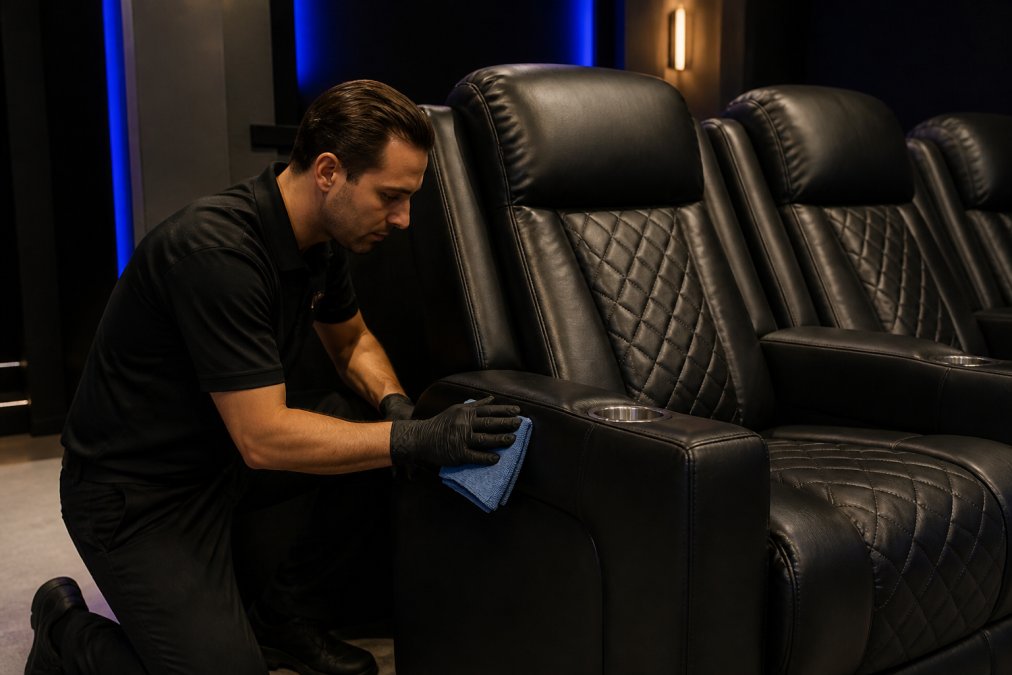
Leather is a natural material that changes with use, part of its appeal. Routine attention keeps it looking its best.
Before applying anything, check the care instructions that came with the seating. Leather types, finishes, and warranty terms vary, so the manufacturer's guidance always comes first.
Start With Routine Dusting
Dust settles into leather grain and seams quickly. A light pass with a dry microfiber cloth keeps it from working into the surface.
Handle Spills Right Away
Blot, don't rub. Gently use a clean, dry cloth to absorb as much of the spill as possible without spreading it. For any additional cleaning, follow the manufacturer's care instructions for your specific leather type and finish.
Know Your Leather Type
Leather upholstery can vary significantly in how it is processed and finished. Aniline leather generally has less surface protection and may absorb liquids or show marks more readily, while semi-aniline and protected or pigmented leathers have added surface protection. Bonded leather is made using leather fibers combined with other materials and may have different care requirements. Because labels alone do not tell you everything about the finish, always follow the manufacturer's care instructions for your specific seating.
Leather Conditioning Best Practices
Condition only when the leather actually needs it, and follow the manufacturer's guidance on which product to use.
When to Condition
Leather that feels dry, stiff, or dull may benefit from conditioning, depending on the leather type and manufacturer's recommendations. There is no universal conditioning schedule; room climate, use, leather type, and finish can all affect care needs. Using too much conditioner or applying it too frequently may leave unwanted residue, so follow the manufacturer's guidance for your specific seating.
Choosing a Product
Choose cleaners and conditioners specifically approved for your leather type and finish, following the seating manufacturer's care instructions whenever available. Avoid household chemicals, DIY mixtures, oils, solvents, or other products unless the manufacturer confirms they are appropriate for the upholstery. Using an unsuitable product may discolor or otherwise damage some leather finishes and could affect warranty coverage.
How to Apply
Start with a clean, dust-free surface and follow the application directions for the specific leather-care product and upholstery. If the manufacturer recommends testing the product first, use an inconspicuous area before treating a more visible surface. Avoid applying more product than directed.
A Simple Care Reference
Task |
Tool |
How Often |
|---|---|---|
Dusting |
Soft, dry cloth |
As needed |
Spill care |
Blot gently with a clean, dry cloth |
Promptly after a spill |
Conditioning |
Product approved for the specific leather and finish |
According to manufacturer guidance and condition |
Cleaning |
Manufacturer-approved method or product |
As needed |
Sun and heat check |
Check exposure to direct sunlight and nearby heat sources |
Periodically |
Protecting Leather from Sun Damage and Heat
Prolonged exposure to direct sunlight and nearby heat sources can affect the appearance and condition of leather over time. Sunlight may contribute to fading or drying, while excessive heat can also dry some leather surfaces. Protecting seating from these conditions is a simple part of routine care.

Control the Room Climate
Use shades, blinds, or curtains when needed to limit prolonged direct sunlight on the seating. Avoid placing leather seating where it will be exposed to significant temperature extremes, and follow any temperature or humidity recommendations provided by the manufacturer.
Watch the Heat Sources
Avoid placing leather seating where it will receive prolonged direct heat from fireplaces, space heaters, heating vents, or similar sources. Follow the seating manufacturer's placement and care recommendations when available.
Periodic Inspections
Periodically check the seating for changes in the leather's appearance or feel, as well as visible wear around seams and stitching. Changes in sunlight, indoor heating, or room conditions may affect how often your seating needs attention, so use the manufacturer's care guidance and the condition of the upholstery as your guide.
Check the Frame and Padding
Leather may be the most visible part of the seating, but periodically check cushions, seams, and reclining mechanisms as well. Keep accessible areas free of dust and debris, and follow the manufacturer's instructions for any maintenance or adjustment of mechanical or powered components.
Simple Habits That Help
Keep pets' nails trimmed or use a protective throw where they sit, avoid sharp objects near the upholstery, and address spills promptly using the care guidance for your specific leather and finish.
When to Call a Professional
For significant scratches, tears, stubborn stains, or other damage you're unsure how to address, consider contacting the seating manufacturer or a qualified leather-care or repair professional before attempting a repair. For routine care, gentle attention and following the manufacturer's instructions are usually more appropriate than aggressive cleaning or treatment.
Frequently Asked Questions
What should you not use on leather home theater seats?
Avoid using household cleaners, DIY mixtures, oils, solvents, abrasive tools, or other products unless the seating manufacturer confirms they are appropriate for your specific leather and finish. Products that are safe for one type of leather may discolor, alter, or damage another. Always check the manufacturer's care instructions before applying a cleaner or conditioner, and use products specifically approved for the upholstery when available.
How does sunlight and heat affect leather home theater furniture?
Prolonged exposure to direct sunlight may contribute to fading, drying, or other changes in some leather finishes over time. Excessive heat from nearby fireplaces, space heaters, heating vents, or similar sources may also affect the upholstery. When possible, limit prolonged direct sunlight and heat exposure, and follow the seating manufacturer's placement and care recommendations for your specific leather and finish.
Should you condition leather chairs, and how often?
Whether leather seating should be conditioned—and how often—depends on the leather type, finish, room conditions, use, and the manufacturer's care recommendations. There is no single schedule that applies to every piece. If conditioning is recommended for your seating, use a product approved for the specific leather and follow the manufacturer's directions for application and frequency. Avoid over-applying conditioner or treating the leather more often than recommended.
Leather home theater seating benefits from simple, appropriate care. Keep the upholstery free of dust and spills, limit prolonged exposure to direct sunlight and heat, and follow the manufacturer's instructions for cleaning and conditioning. Because leather types and finishes vary, the care guidance provided for your specific seating should always come first. When you're ready to create or update your theater space, explore the home theater seating collection at Lounge Apex.