


How to Identify a High-Quality Pool Table: A Buyer's Checklist
Last Updated: November 13, 2026
Quick Summary
To identify a high-quality pool table, start with the bed: genuine slate gives a dense, stable, flat playing surface, while non-slate beds of wood, honeycomb, or composite may shift or warp over time. Then judge the build you can touch, a braced frame that keeps the cabinet square, firmly seated rubber cushions with even height, and stable legs that help leveling hold. Cloth and construction details matter more than decorative looks alone.
- Slate may come in one-piece or three-piece construction, which can affect transport and installation.
- Thicker slate is not automatically better; what matters is that it is sound, flat, and correctly supported.
- A table described as slate without stated thickness or piece count deserves a closer question.
- Check for tight rail cloth and even cushion height, since uneven cushions make banks harder to predict.
- Professional leveling is worth planning for, especially with three-piece slate.
Table of Contents
- Start With the Slate: Slate vs Non-Slate Pool Table Construction
- Frame, Cabinet, and Cushions: What Separates a High-Quality Pool Table From a Decorative One
- Pool Table Leveling, Leg Stability, and the Cloth That Ties It Together
- High-Quality Pool Table Buyer's Checklist
- Frequently Asked Questions
Start With the Slate: Slate vs Non-Slate Pool Table Construction
A beautiful pool table can become the centerpiece of an entertainment room, but exceptional craftsmanship goes far beyond its appearance. Understanding what makes a high-quality pool table begins beneath the cloth, where the playing surface, structural support, and construction details influence both performance and long-term enjoyment.
Slate is a stone bed that gives a pool table its flat playing surface. Genuine slate is widely used for its dense, stable qualities, while non-slate beds of wood, honeycomb, or composite may differ in how they hold their shape and affect ball roll.
Slate may come in one-piece or three-piece construction, and the number of pieces can affect how a table is transported and installed. Thicker slate is not automatically better; what matters most is that the slate is sound, flat, and correctly supported. The complete pool table buying guide covers size, slate, delivery, and room planning in more detail.
Feature |
Slate Pool Table |
Non-Slate Pool Table |
|---|---|---|
Playing surface |
Natural stone provides a dense, stable playing surface |
Typically constructed from engineered wood or composite materials |
Ball performance |
Properly installed and leveled slate supports consistent ball movement |
Performance varies depending on material quality and construction |
Durability |
Slate resists warping under normal indoor conditions |
Some materials may be more susceptible to changes in humidity |
Weight |
Generally heavier and requires careful handling |
Often lighter and easier to move |
Installation |
May require specialized assembly and professional leveling |
Installation requirements vary by table design |
Best suited for |
Homeowners prioritizing traditional billiards performance and long-term ownership |
Recreational players seeking a lighter or more economical alternative |
Watch out: a table described as "slate" without any stated thickness or piece count deserves a closer question.
Frame, Cabinet, and Cushions: What Separates a High-Quality Pool Table From a Decorative One
Construction quality lives in the parts you can touch. A decorative table looks the part in photos; a well-built one holds its shape, absorbs play, and keeps the rails true.
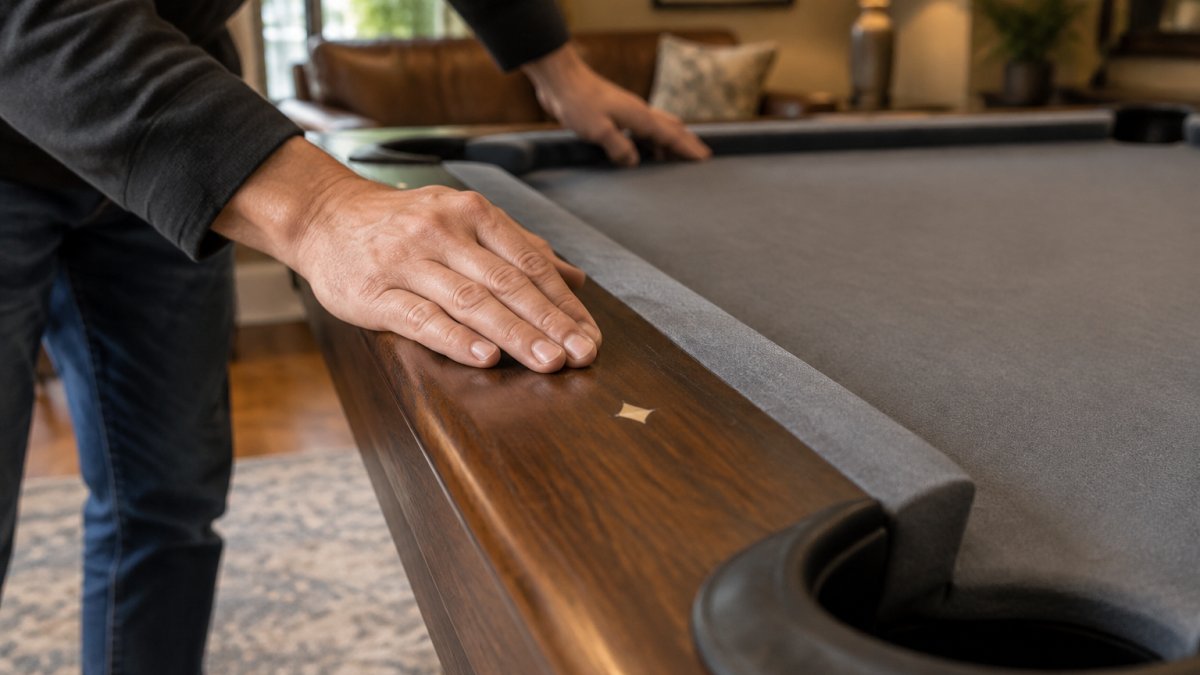
The frame is the internal skeleton that supports the slate and keeps the cabinet square. Frame materials and bracing both influence how a table holds its shape, and engineered materials can perform well too, judge the build, not just the label. If solid wood matters to you, the guide to solid wood pool tables explains grain and refinishing.
Rubber cushions are designed to return the ball with consistent rebound, and uneven cushions can make banks harder to predict. Quality rail construction keeps the cushion firmly seated, so check for tight rail cloth and even cushion height.
See Quality Craftsmanship in Practice
One way to evaluate pool table quality is to examine the construction and design details of an actual table rather than relying on appearance alone.
The Modern Billiards Natural White Oak Rift Pool Table is an example of the refined, contemporary craftsmanship we look for when selecting products for Lounge Apex. Its natural white oak aesthetic offers a sophisticated alternative to traditional billiards table styling, making it particularly appealing for thoughtfully designed entertainment spaces.
When evaluating this or any premium pool table, review the manufacturer's specifications for the playing surface, frame construction, rail materials, and available customization options. These details help distinguish a carefully considered investment from a table chosen primarily for its appearance.
Once you know what to look for, comparing home pool tables by size, slate, and finish becomes far easier.
Pool Table Leveling, Leg Stability, and the Cloth That Ties It Together
A level table plays honestly; an unlevel one punishes good shots.
Proper leveling is essential to a pool table's performance. Even a beautifully constructed table can produce inconsistent ball movement if its playing surface is not correctly aligned and supported.
A high-quality pool table should feature a stable frame, secure leg construction, and appropriate support beneath the playing surface. For slate tables, careful assembly and precise leveling help create the consistent playing conditions that billiards enthusiasts expect.
Professional installation is particularly valuable for multi-piece slate tables, where individual slate sections must be carefully aligned and leveled. Installation requirements vary by manufacturer, so always review the specific table's delivery and assembly recommendations before purchasing.
Cloth affects speed, durability, and maintenance. Worsted and wool-blend cloths differ in feel and ball speed, which is worth weighing against how you play. A comparison of pool table cloth fabric types breaks down durability and care for each.
Before ordering, measuring a doorway for pool table delivery helps you plan for diagonal clearance, hallway turns, and stairwell pinch points.
High-Quality Pool Table Buyer's Checklist
Before investing in a pool table, use this checklist to evaluate its construction, playing performance, and suitability for your home.
- Playing surface: Confirm whether the table uses genuine slate, its thickness, and whether it features one-piece or multi-piece construction.
- Frame construction: Look for sturdy structural support, reinforced framing, and materials appropriate for the table's weight.
- Leg stability: Review how the legs attach to the frame and whether the table includes suitable leveling adjustments.
- Rail and cushion quality: Examine rail construction and cushion materials designed to provide consistent ball rebound.
- Playing cloth: Compare available cloth materials, durability, maintenance requirements, and playing characteristics.
- Craftsmanship: Inspect the quality of the finish, joinery, pocket construction, and overall attention to detail.
- Installation requirements: Confirm delivery arrangements, assembly procedures, and whether professional leveling is recommended or required.
- Manufacturer support: Review warranty coverage, care recommendations, and available replacement components.
A thoughtfully selected pool table should combine dependable construction with a design that complements your entertainment space. Evaluating these details before purchasing can help you make a more confident investment.
A well-crafted pool table is more than an attractive addition to a game room. Its playing surface, structural support, rail construction, and finishing details all contribute to the experience of owning and playing on the table.
At Lounge Apex, we believe choosing a pool table should begin with understanding its construction and craftsmanship. Taking time to compare materials, specifications, and available customization options can help you select a table that complements both your playing preferences and your entertainment space.
For a closer look at available styles and configurations, explore our Pool Tables Collection.
Frequently Asked Questions
Is a slate pool table better than a non-slate table?
For consistent play, a slate bed is the stronger choice. Slate is dense and stable, so it holds its shape and gives the ball a true roll. Non-slate surfaces, often made from wood or composite, may be lighter and can differ in how they hold their shape over time. That does not make every non-slate table unusable, and the right choice depends on how and where you plan to play. Confirm the slate thickness and whether it is one piece or three pieces.
How can you check whether a pool table is level?
Pool table leveling starts with the frame and legs, not the felt. Check that the table sits firmly on all legs with no rocking, then look for adjustable feet or shims under the cabinet. A spirit level across the slate in several directions will show whether the surface is true. On a used table, roll a ball slowly along the rails and across the center; it should travel straight without drifting. Professional leveling is worth considering for any full-size slate table.
What is the difference between wool-blend and worsted pool table cloth types?
Wool-blend and worsted cloths differ in composition and feel, and each can affect ball speed differently. Neither is universally better; the right fit depends on how you play and the look you want for your room. Consider how often you play and whether the cloth color and feel match your room.







