


What Happens If Furniture Arrives Damaged?
Table of Contents
- What Happens If Furniture Arrives Damaged: First Steps
- How to Document Shipping Damage and Contact the Seller
- The Furniture Damage Claim Process: Repair, Replacement, Refund, or Escalation
- Frequently Asked Questions
Last Updated: October 8, 2026
What Happens If Furniture Arrives Damaged: First Steps
Discovering damage when furniture arrives can be frustrating, especially with a significant purchase. Taking time to inspect the shipment, document what you find, and review the applicable delivery instructions can help you determine the appropriate next steps.
Most issues fall into three categories, each handled differently: visible packaging damage, concealed damage found after unpacking, or a manufacturing defect that appears later.
- Visible damage: The box, crate, or wrapping is clearly crushed, torn, or punctured.
- Concealed damage: Packaging looks fine, but the piece inside has a crack, scratch, or dent.
- Manufacturing defect: The item was packed correctly but has a flaw in how it was made.
Larger furniture purchases, including home theater seating, pool tables, and home bar furniture, may involve freight delivery. Inspection and documentation requirements can vary depending on the product, supplier, and carrier, so it's important to review the instructions that apply to your shipment.
When inspection is possible, look for visible damage to the packaging and accessible furniture surfaces, including corners, edges, finishes, and other exposed components. Follow the delivery team's instructions and avoid unpacking or moving heavy items in an unsafe manner.
How to Document Shipping Damage and Contact the Seller
Documenting shipping damage means capturing the item and packaging condition as close to delivery as possible, then sending that record to the seller through its official support channel.
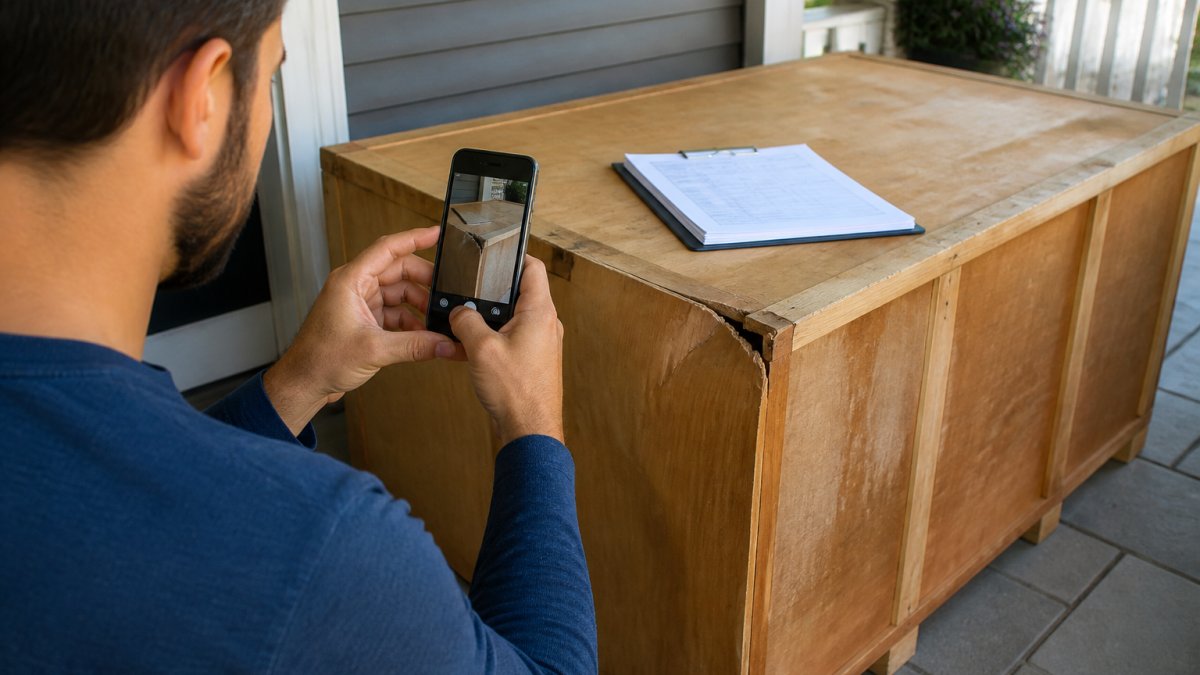
When documenting shipping damage, take photographs of the packaging, shipping label, and affected furniture from several angles when it is safe to do so. Keep the packaging and delivery paperwork when possible, note when the damage was discovered, and contact the seller promptly through its designated support channel.
Save copies of your correspondence and any claim information provided. A written record can help everyone involved understand what was reported and what steps have already been taken.
For freight deliveries, review the seller's and carrier's inspection and damage-reporting instructions. Some shipments may require visible damage to be noted on delivery paperwork, while concealed damage may follow a separate reporting process. Requirements and deadlines vary, so confirm the procedures that apply to your specific order rather than relying on a universal rule.
The Furniture Damage Claim Process: Repair, Replacement, Refund, or Escalation
Once damage has been reported, the seller can explain the next steps based on the circumstances of the delivery and the policies that apply to the purchase. Depending on the product, type of damage, and applicable terms, several possible outcomes may be considered.
- Repair: Depending on the product and damage, repair may be considered when appropriate and available.
- Replacement: A replacement part or item may be offered, subject to the applicable policies and availability.
- Refund or store credit: These may be possible depending on the purchase terms, the circumstances, and applicable consumer protections.
- Further review: Some cases may require additional documentation or review involving the seller, supplier, or carrier.
Which applies depends on the damage, the item, and the policy at purchase. Ask the seller to confirm options in writing before agreeing to anything.
If the review takes longer than expected, follow up through the seller's designated support channel. Refer to your order or claim information, ask whether additional documentation is needed, and request clarification about the next steps. Keep a record of the correspondence for future reference.
Customer rights and available remedies may also depend on applicable consumer protection laws and the terms of the purchase. For questions about your rights, consult relevant official consumer protection resources or seek qualified guidance appropriate to your situation.
Keep one distinction straight: a defect concerns how the item was made, while delivery damage concerns transit. They often follow different review paths, so describe the issue accurately.
If an order from Lounge Apex arrives damaged, defective, or incorrect, contact our customer service team within 48 hours of delivery, as required by our general Return and Refund Policy. Include your order number, photographs clearly showing the issue, and a brief description of the problem. Our team will review the information and provide the applicable next steps.
Some products, including Carl's Place items, have separate product-specific policies that may apply instead of our general return terms. Always review the policy applicable to your purchase.
Discovering damage after a furniture delivery can be frustrating, but clear documentation and timely communication can help you navigate the next steps. Review the applicable delivery and damage policies, keep records of what you find, and contact the seller through its designated support channel.
At Lounge Apex, we want customers to feel informed throughout their purchase experience. Explore our home entertainment collections to discover furniture for your game room, home theater, or home bar.
Frequently Asked Questions
What should I do immediately if my furniture arrives damaged?
When possible, inspect the shipment at delivery and document any visible damage to the packaging or furniture. Take photographs, retain relevant packaging and delivery paperwork, and contact the seller promptly through its designated support channel. For Lounge Apex orders governed by our general Return and Refund Policy, damage, defects, or incorrect items must be reported within 48 hours of delivery. Product-specific policies may differ, so review the terms applicable to your purchase.
What is the difference between visible damage and concealed damage?
Visible damage is apparent at delivery, such as a crushed carton, torn wrap, or a crack you can see during inspection. Concealed damage is discovered only after unpacking, even though the packaging looked fine. Manufacturing defects are separate again: a flaw that exists before shipping and may appear later. Each type may follow a different reporting path, so review the applicable delivery and damage policies before submitting a claim.
How do I document shipping damage for a claim?
Take clear photographs of the packaging, the shipping label, and the damaged area from several angles. Keep the packaging and any damaged components until the claim is resolved. Write a short description of what you found and when, and retain your purchase record and delivery paperwork. Then follow the seller's published instructions for submitting a written claim, since required evidence and deadlines vary by seller and carrier.


