


Tips for Arranging Furniture in Small Basements
Last Updated: October 23, 2026
Quick Summary
Tips for arranging furniture in small basements begin with a measured sketch of stairs, posts, and ducts before you shop, then naming the room's main job. Anchor seating around a focal point, choose multifunctional pieces, and keep walkways clear so the space stays comfortable.
- Sketch the space first and mark fixed obstacles like stairs, posts, and low ducts.
- A 36-inch path is a common planning target, but confirm clearances against product specifications.
- Place the television on the longest uninterrupted wall and float the sofa opposite it.
- Measure the stair turn and doorway width before buying any large piece.
- Light-colored walls and low-profile furniture help a low-ceiling basement feel more open.
Table of Contents
- Start With a Measured Plan: Small Basement Layout Ideas That Work
- How to Arrange Furniture Around a TV Without Blocking the Room
- Make the Most of Your Basement With Multifunctional Furniture
- Making a Small Basement Feel More Open
- Basement-Safe Furniture and Moisture Considerations
- Arranging for Everyday Use: Traffic Flow and Comfort
- Frequently Asked Questions
- Transform Your Small Basement Into an Inviting Retreat
Start With a Measured Plan: Small Basement Layout Ideas That Work
Arranging furniture in a small basement begins with understanding the space you have. Before selecting furniture or planning your layout, take accurate measurements and sketch the room, noting stairways, support columns, low ceilings, and other architectural features that may influence furniture placement.
Identify the natural walking paths and allow comfortable clearance between furniture pieces. A walkway of approximately 36 inches is a useful planning guideline, although actual requirements may vary depending on the layout and applicable building standards.
With a clear understanding of your basement's dimensions and limitations, you can begin creating an entertainment space that feels intentional, comfortable, and inviting.
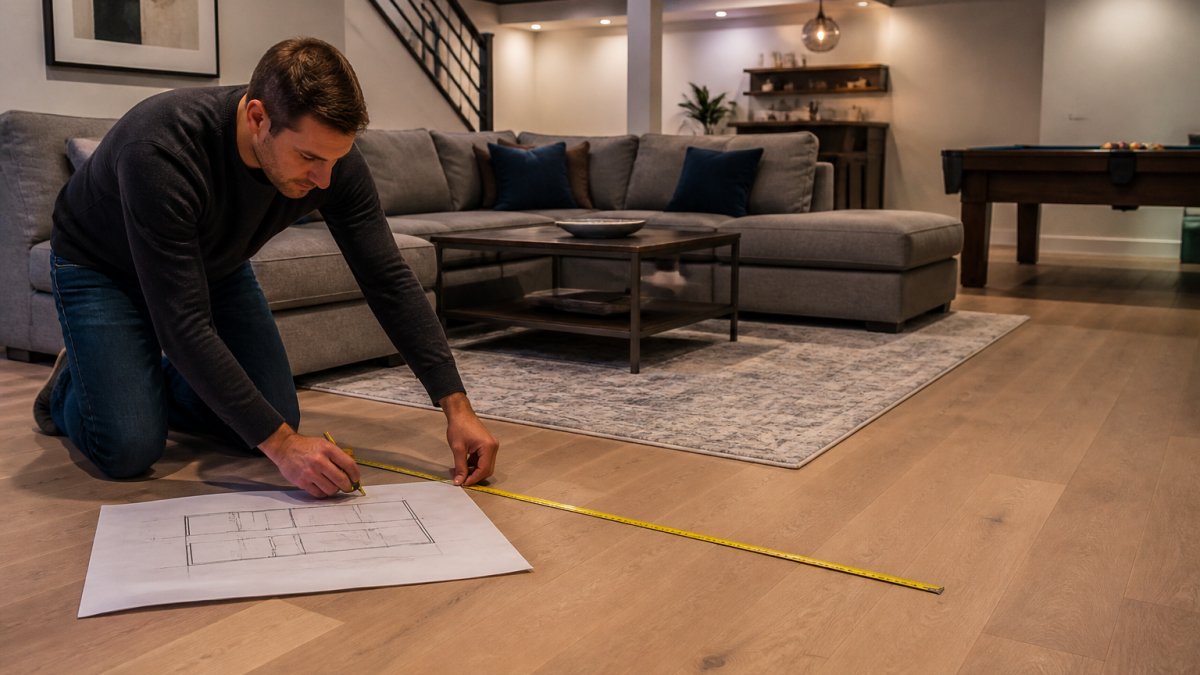
Next, identify the room's primary purpose—whether that's movie nights, a game area, a home bar, or a quiet lounge. For broader direction, browse luxury basement entertainment room design ideas for 2026.
How to Arrange Furniture Around a TV Without Blocking the Room
Let the screen anchor the seating, not swallow the floor: place the television on the longest uninterrupted wall, then float the sofa off the opposite wall to face it. Check the manufacturer's recommended viewing distance for the specific screen size, since guidance varies by model and resolution.
Angle seating toward the screen without blocking the stair path, use a swivel chair to bridge viewing and conversation, and keep side tables narrow on tight walkways. A wall-hugger recliner can be an excellent option for tighter rooms. For example, the Samery wall-hugger reclining loveseat lists approximately six inches of rear clearance. Always confirm the specific product's requirements before purchasing. Browse media consoles sized for compact walls, and compare home theater seating for small rooms.
Make the Most of Your Basement With Multifunctional Furniture
Multifunctional furniture for small spaces solves storage and layout at once: seating that stores, a table that converts, a cabinet that hides clutter. Consider storage ottomans, nesting tables, compact bar cabinets, and vertical shelving that uses wall height instead of floor space.
If a home bar is part of the plan, read what to plan before buying a home bar first.
Making a Small Basement Feel More Open
Light-colored walls and furnishings can reflect more light, helping a basement with lower ceilings feel more open and inviting. Layer ceiling fixtures, table lamps, and accent lighting to create warmth and dimension. Keep windows unobstructed whenever possible, and consider low-profile furniture that maintains an open sightline. A long, low media console, for example, may feel less visually imposing than a tall bookcase.
Basement-Safe Furniture and Moisture Considerations
Basements carry moisture risk that upper floors do not. Check for dampness and address water issues first, raise furniture slightly off concrete where practical, and avoid placing porous pieces directly against a damp wall. Solid wood, engineered wood, and metal each behave differently in humid conditions; finish and construction matter as much as the material name, so review the manufacturer's care guidance.
Arranging for Everyday Use: Traffic Flow and Comfort
Walk the finished arrangement as you actually live in it, sit where you will sit on movie night and check that the path from the stairs to the seating is clear. Adjust in small steps; a layout that looks right on paper often needs real-world tuning.
Planning Step |
What to Check |
Why It Matters |
|---|---|---|
Measure the room |
Walls, posts, stairs, door swings |
Prevents furniture that will not fit |
Set the focal point |
TV wall or game table |
Gives seating a clear anchor |
Test the layout |
Sit, walk, and adjust |
Catches problems before delivery |
Frequently Asked Questions
How should you arrange furniture in a small basement?
Begin by measuring the room, doorways, and window ledges, then decide the primary purpose before placing anything. Pull seating slightly away from the walls to create a defined seating zone, anchor it with an area rug, and keep a clear walking path of roughly 36 inches between pieces. A wall-hugger recliner or a compact sectional can preserve circulation without shrinking the room. Test the layout with painter's tape before committing, and verify each product's published dimensions and clearance requirements.
How do you make a small basement feel bigger?
Light colors on walls and upholstery, layered lighting, and visible floor space do more for perceived size than any single purchase. Choose furniture scaled to the room rather than oversized pieces, use vertical storage to clear clutter, and let natural light from a window ledge stay unobstructed. Mirrors and glass surfaces can help, but the biggest gains come from keeping paths open and avoiding a wall-to-wall arrangement that leaves no breathing room.
What should you measure before buying furniture for a basement?
Measure the room's length and width, ceiling height, door and stairwell widths, window and ledge positions, and the location of outlets, HVAC registers, and support columns. Note the turning radius at the base of the basement stairs. Compare those figures against each product's published dimensions and any required wall clearance, such as the roughly 6 inches a wall-hugger recliner needs. Confirm delivery path measurements before ordering, since a piece that fits the room may not fit the stairs.
Transform Your Small Basement Into an Inviting Retreat
A small basement doesn't have to limit your vision for a beautiful entertainment space. With thoughtful furniture placement, carefully chosen furnishings, and attention to comfort and functionality, even a modest footprint can become a welcoming place to relax and gather.
Whether you're creating a cozy home theater, an intimate lounge, or a multifunctional space for family and friends, the key is choosing pieces that complement your room rather than overwhelm it.
At Lounge Apex, we believe exceptional entertainment spaces are defined by how they bring people together, not by their square footage. Explore our curated selection of home entertainment furnishings and discover how thoughtful design can make the most of every space.







